Micro-Zep Footwear & Image Stabilzation Ecosystems
TITLE: Biomechanical Footwear Harvester and Kinetic-Powered Haptic & Audio Subsystem
STATUS: Provisional Application Pending
GOVERNING ARCHITECTURE: Integrates with USPTO Patent #12,333,564 (APE-X.ai)
EXECUTIVE ABSTRACT
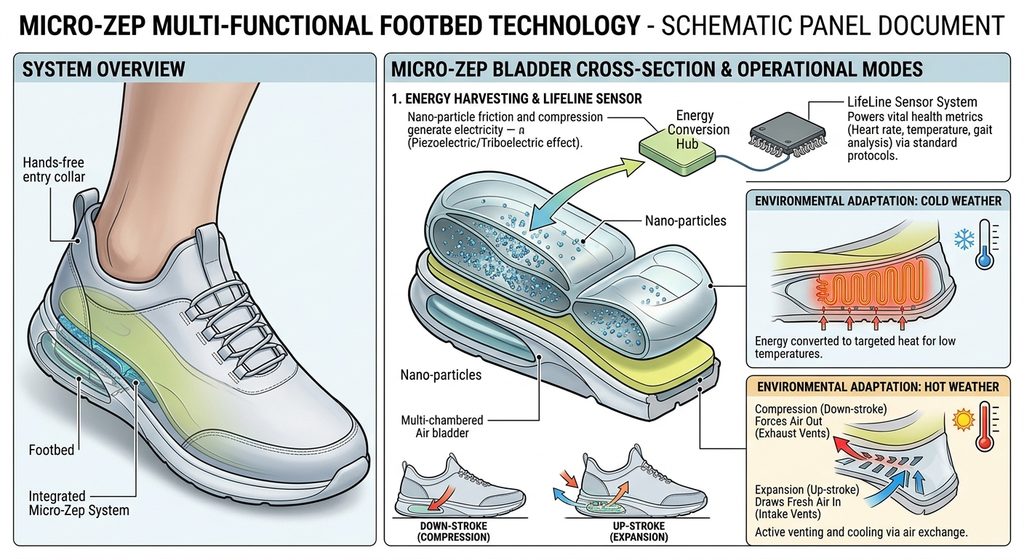
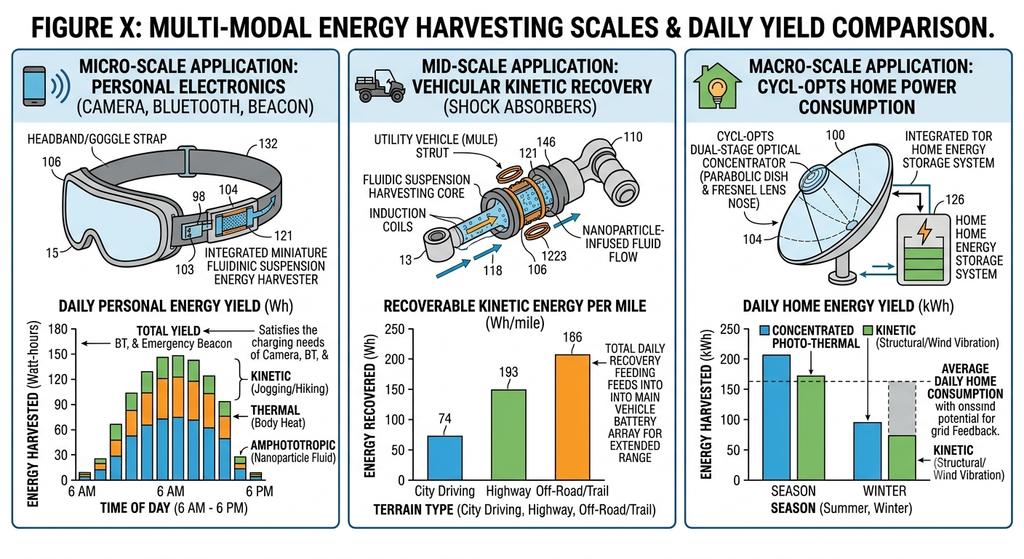
The Micro-Zep architecture radically disrupts the wearable tech and biomechanical footwear industries by eliminating the need for rigid, disposable, and flammable lithium-ion or coin-cell batteries (e.g., CR2032). The system integrates a highly engineered fluidic impact-compression bladder directly into the footbed or midsole chassis of a shoe. As the user walks, physical foot-strikes drive functionalized nanoparticle-infused fluid through a micro-transducer hub, converting raw human kinetic energy into continuous, stabilized electrical power. This perpetual power supply supports a robust suite of integrated digital telemetry, active thermal regulation, and advanced haptic/audio alert systems.
CORE MECHANICAL & THERMAL ARCHITECTURE
The physical structure acts as an intelligent, biomechanical power generator and climate-control system:
- Fluidic Kinetic Harvester: Formed as an injection-molded, flexible impact-compression bladder, the system uses the down-stroke of a human foot to force a proprietary nano-fluid through an internal micro-transducer hub, generating continuous, autonomous electrical power.
- Active Thermal Elevation (“Mount Everest” Mode): The internal kinetic and viscous friction of the suspension fluid during user locomotion generates a localized thermal elevation of 5°F to 12°F. When integrated into an insulated winter footwear chassis, the footbed traps this thermal elevation to provide continuous, battery-free foot warming.
- Active Ventilation (“Serengeti” Mode): For hot-weather configurations, the impact-compression bladder is coupled to one-way intake and exhaust micro-valves. Down-stroke compression acts as a bellows pump, forcing warm internal air out through the exhaust micro-valves, while the up-stroke decompression draws fresh ambient air in, establishing active footbed cooling.
HAPTIC, AUDIO & UTILITY PAYLOAD
The electrical power generated by the fluidic harvester charges a micro-supercapacitor to operate advanced physical communication features without third-party dependencies:
- Fluidic Haptic Feedback: A micro-haptic transducer embedded within the bladder utilizes the internal fluid’s pressure and viscosity to amplify mechanical vibrations, delivering a distinct, localized physical alert directly to the plantar surface of the user’s foot.
- Acoustic Resonance Emitter: The system integrates an audio emitter that utilizes the structural polyurethane of the footwear’s midsole—or the bladder membrane itself—as a resonance chamber to broadcast audible alerts.
- Kinetic Therapeutic Massage: Using an associated mobile application, the user can manually trigger the micro-haptic transducer to generate sustained, rhythmic mechanical oscillations. The fluid evenly disperses these pulses across the plantar fascia to provide an on-demand, therapeutic foot massage powered entirely by the user’s prior kinetic locomotion.
ENTERPRISE NETWORK INTEGRATION
The Micro-Zep hardware bridges the gap between physical biomechanics and authenticated digital networking, opening highly lucrative SaaS and data licensing opportunities:
- LifeLine Emergency Telemetry: The onboard micro-supercapacitor provides continuous power to an embedded LifeLine telemetry module, which includes a 3-axis accelerometer, a heart-rate interface, and wireless transceivers (GPS, BLE, LoRa, 457 kHz).
- Independent “Recall” Beacons: The wireless communication module operates entirely independently of closed-ecosystem third-party location trackers (e.g., Apple AirTags). For instance, a parent or network operator can transmit a “Come Home” or “Recall” command via the open-architecture network to instantly trigger the haptic vibration and audio resonance alarms.
- The Jamatcha Protocol: To prevent automated bot spoofing, synthetic data injection, or malicious network tampering, the onboard logic runs the localized Jamatcha cryptographic authentication protocol to ensure all telemetry originates from a verified human.
- APE-X.ai Gamification (USPTO #12,333,564): Fully authenticated telemetry data is routed to the remote APE-X.ai network server. The AI engine tracks the volume of verified electrical energy harvested by the user’s physical movement and distributes interactive, gamified digital rewards and micro-transactions directly to their associated digital profile through proprietary “Opt-in to Cash-in!” protocols.